Bissell Laboratory Research Focus: Restoring The Normal Context
An
assay involving a three-dimensional (3D) basement membrane has been used
to investigate the response of a series of human breast-tumour cell lines
at different stages of progression, cultured within a physiological context.
Although the nonmalignant cells are similar in appearance to the malignant
cells when cultured on plastic substrata, the phenotypic differences are
striking when the cells are cultured in a reconstituted basement membrane
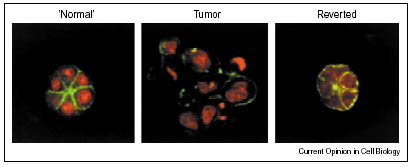
(rBM).Under these conditions, the non-malignant cells undergo growth arrest
and form a polarized, alveolar structure, whereas the malignant cells proliferate
and form amorphous structures. Analysis of ECM
and growth-factor receptors in the non-malignant and malignant cell types
indicates that the malignant cells overexpress INTEGRINS and epidermal growth
factor receptor (EGFR). Addition of anti-ß1-integrin antibodies to
the malignant cells, when cultured in 3D rBM, downregulated EGFR expression,
restored cellular organization, and decreased overall tumorigenicity. This
observation led to the discovery of a bidirectional cross-modulation of
integrin and EGFR signalling that exists only when cells are cultured in
3D. Furthermore, the tumorigenic phenotype of the malignant cells was reversed
by treatment with EGFR-inhibitory antibodies, mitogen-activated protein
kinase (MAPK) pathway inhibitors, or phosphatidylinositol 3-kinase (PI3K)
pathway inhibitors. Inhibiting several different signalling pathways restores
even an aggressive breast-cancer cell line to a normal phenotype.
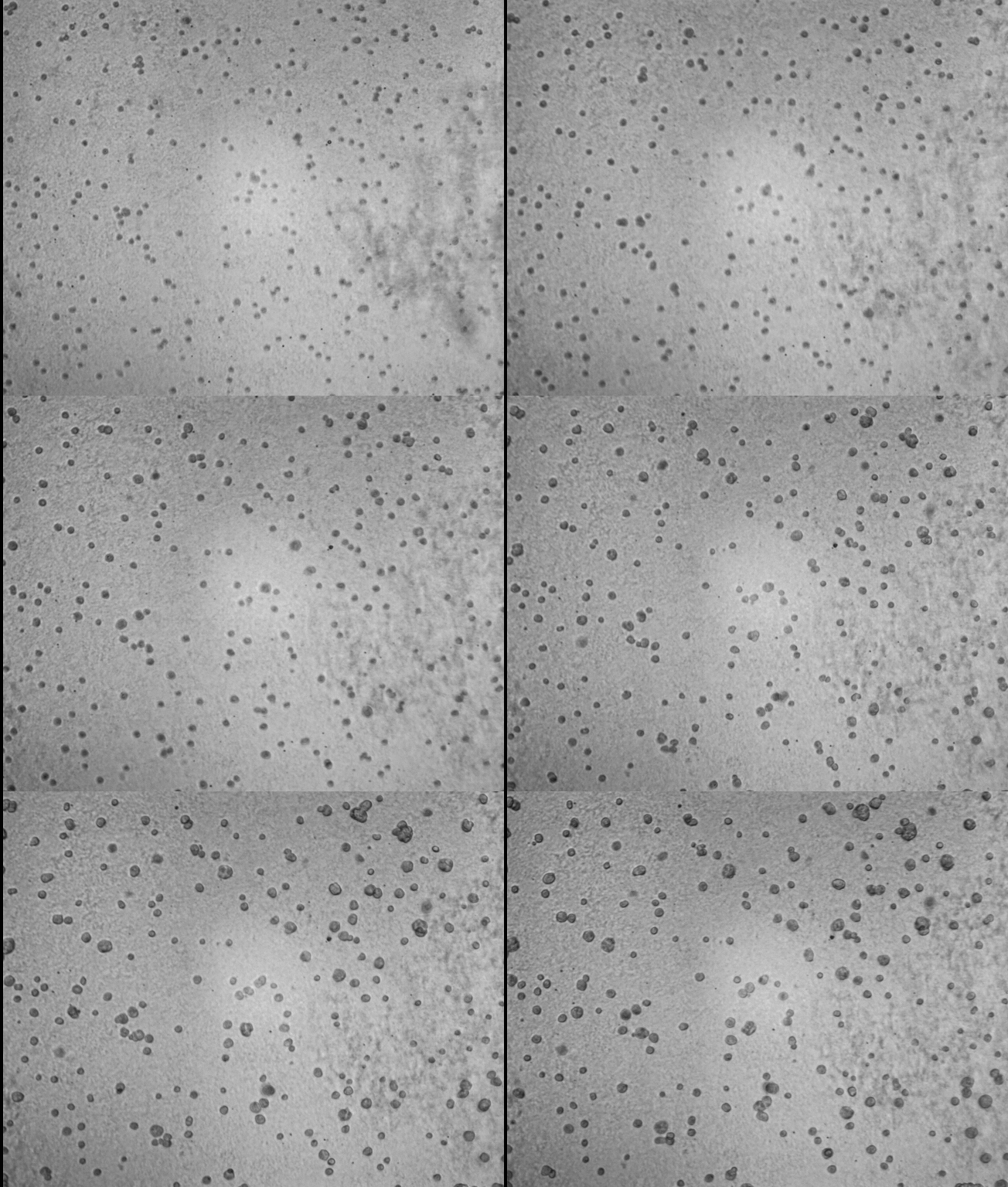
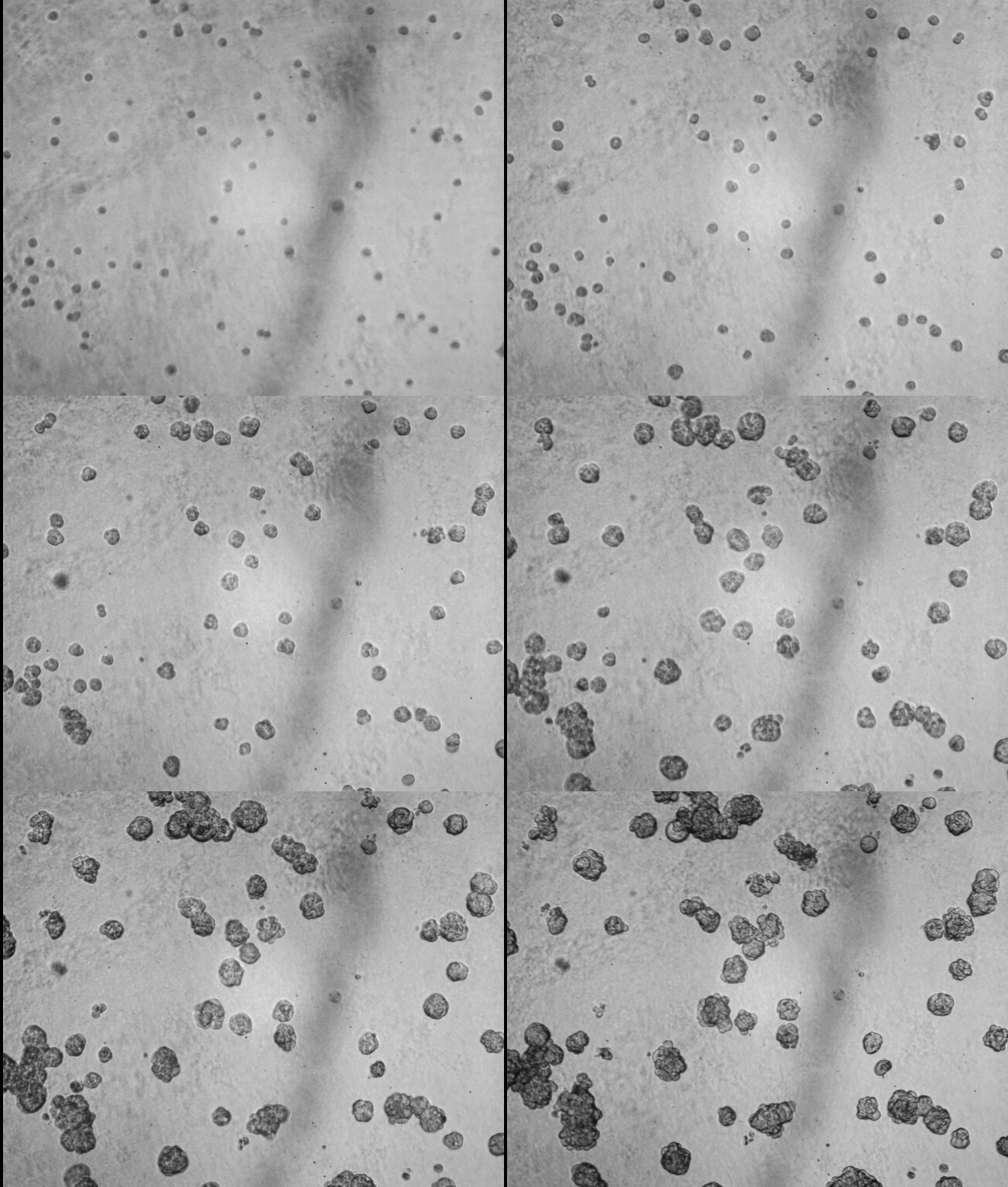
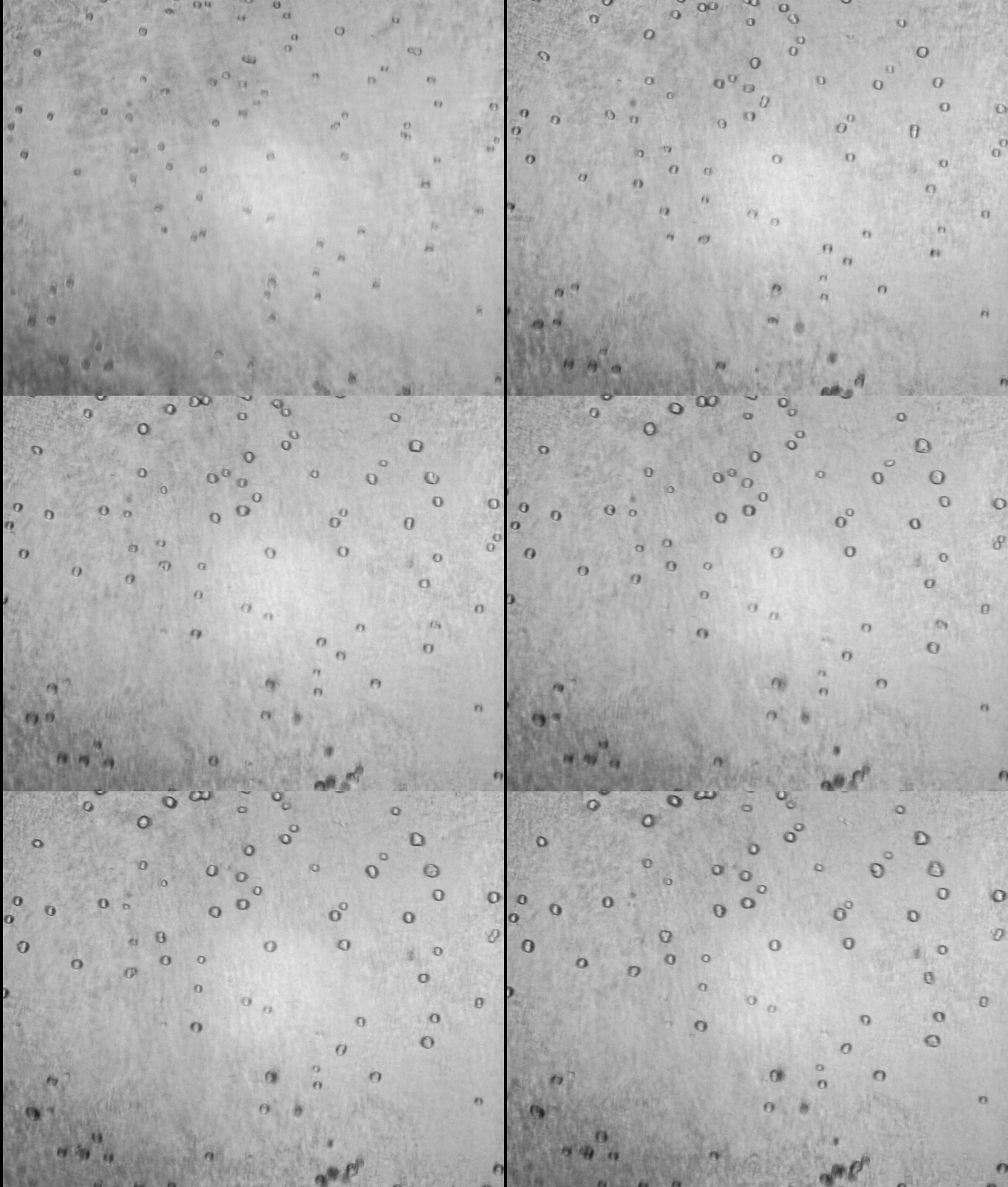
View our movies displaying cell phenotypes in 3D culture-
ECM-Degrading Enzymes and Morphogens In The Mammary Gland
- Epimorphin
- Hormones and ECM
- Organotypic Branching Morphogenesis
Tumorigenesis, Phenotypic Reversion, and Dormancy
click
here to visit this review
article or visit our research page to learn about our Current
Projects